Green Label, Real Chemistry: The Molecular Truth Behind Organic Pesticides
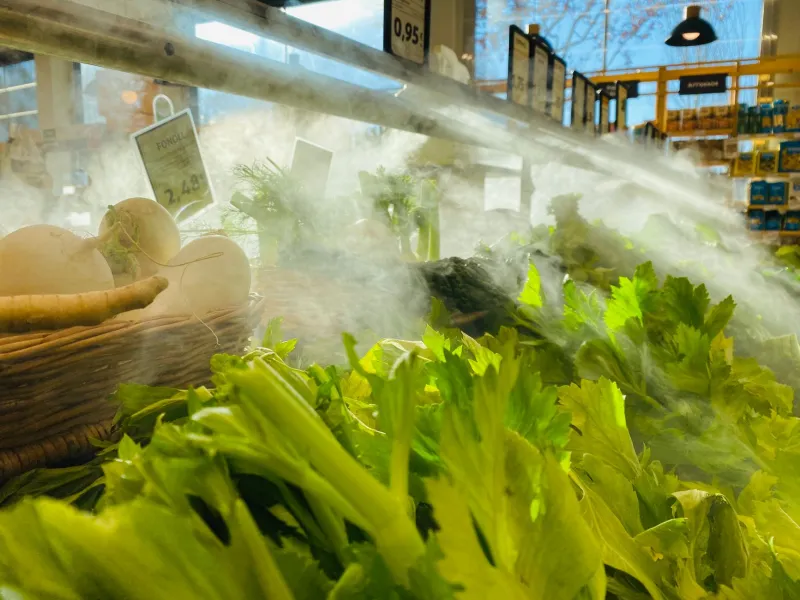
Walk through any natural grocery store in the United States and the word organic conjures an image of farming untouched by chemistry—dew on heirloom tomatoes, soil tended by earthworms alone, insects managed by nothing more aggressive than a well-placed row cover. That image is, in significant part, a fiction. Certified organic agriculture in America operates under a regulatory framework administered by the USDA's National Organic Program (NOP), which permits a carefully curated list of substances for pest and disease management. Many of those substances are chemically active, biologically potent, and carry environmental trade-offs that rarely appear in consumer-facing marketing.
Understanding what those compounds actually do at the molecular level—and what they leave behind in soil, water, and non-target organisms—is precisely the kind of inquiry that agricultural chemistry demands of any pesticide, regardless of its origin story.
What "Natural" Actually Means in a Regulatory Context
The NOP's National List of Allowed and Prohibited Substances draws a distinction not between "chemical" and "non-chemical," but between synthetic and non-synthetic materials, with numerous exceptions in both directions. A substance can be derived from a mineral or botanical source and still function as a potent biocide. The critical variable is not origin—it is mechanism.
Copper sulfate, for instance, is among the oldest and most widely used fungicides in organic production. Its use predates synthetic chemistry entirely; Bordeaux mixture, a combination of copper sulfate and lime, was developed in nineteenth-century France to combat downy mildew in vineyards. Today, it remains an approved tool for organic growers managing fungal and bacterial diseases across dozens of crops. But copper is a heavy metal. Unlike many synthetic fungicides that degrade through microbial activity or photolysis, copper accumulates in soil with each application. Studies examining long-term organic vineyard and orchard soils in California and the Pacific Northwest have documented copper concentrations that inhibit earthworm populations and suppress microbial diversity—the very biological richness that organic certification ostensibly protects.
Sulfur: Ancient Chemistry, Modern Complexity
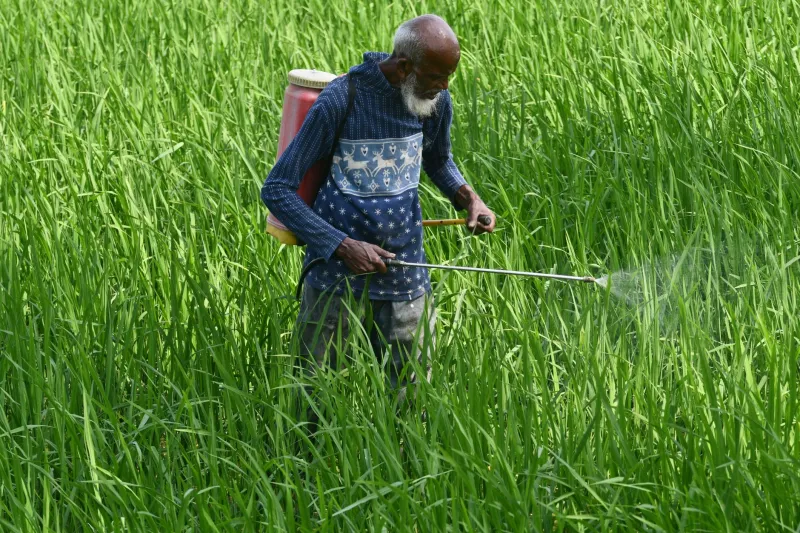
Elemental sulfur is another cornerstone of organic pest and disease management. Applied as a dust or wettable powder, it controls powdery mildew, certain mites, and a range of fungal pathogens. Its mechanism involves the disruption of electron transport within fungal cells—a process that interferes with cellular respiration at the mitochondrial level. At sufficient concentrations, sulfur is phytotoxic, capable of damaging the very crops it is meant to protect, particularly under high temperatures.
From an environmental standpoint, sulfur's profile is mixed. It breaks down relatively quickly and does not bioaccumulate in the way persistent organochlorines do. However, repeated applications can acidify soil over time, shifting pH in ways that alter nutrient availability and microbial community composition. Sulfur dust also poses inhalation risks for farmworkers—a public health consideration that does not disappear simply because the compound appears on an approved organic list.
Neem and Azadirachtin: Botanical Complexity at the Molecular Scale
Few compounds in organic agriculture generate more enthusiasm—or more scientific nuance—than neem oil and its primary active constituent, azadirachtin. Derived from the seeds of Azadirachta indica, a tree native to South Asia, azadirachtin is a tetranortriterpenoid with a molecular structure of remarkable complexity. It disrupts insect endocrine function by interfering with ecdysone, the hormone that regulates molting and metamorphosis. Insects exposed to sublethal doses may fail to complete larval development, reproduce abnormally, or exhibit feeding deterrence.
This mechanism is frequently cited as evidence of neem's selectivity—it targets invertebrate hormonal pathways with limited direct mammalian toxicity. That selectivity, however, is not absolute. Research has documented negative effects on beneficial insects, including parasitoid wasps and certain bee species, particularly when applications coincide with flowering periods or when residues persist on foliage. The "natural" origin of azadirachtin does not exempt it from the ecological calculus that governs any biologically active compound introduced into an agroecosystem.
Neem oil formulations also contain additional triterpenes and fatty acids beyond azadirachtin itself, making the full toxicological profile of commercial products considerably more complex than single-compound analysis would suggest—a dynamic that echoes concerns raised in broader discussions of pesticide formulation chemistry.
Pyrethrin: The Flower That Kills
Derived from Chrysanthemum cinerariifolium, pyrethrins are among the most acutely toxic insecticides permitted in organic production. They function by binding to voltage-gated sodium channels in insect neurons, preventing the channel from closing and causing continuous nerve firing that leads to paralysis and death. The mechanism is nearly identical to that of synthetic pyrethroids—a class of compounds developed specifically to mimic and improve upon pyrethrin's chemistry.
Pyrethrins degrade rapidly in sunlight and soil, which limits their persistence but also reduces residual efficacy, often necessitating repeated applications. Their acute toxicity to aquatic invertebrates and fish is well-established; runoff events following pyrethrin applications can cause significant harm to stream and pond ecosystems. The compound's rapid environmental breakdown does not eliminate the risk window surrounding application.
Spinosad and the Fermentation Frontier
Spinosad occupies an interesting position in the organic chemistry toolkit. Produced through fermentation of the soil bacterium Saccharopolyspora spinosa, it is technically a natural product but one generated through industrial microbial processes. Its active components—spinosyn A and spinosyn D—act on nicotinic acetylcholine receptors and GABA-gated chloride channels in insect nervous systems, producing hyperexcitation and death.
Spinosad is broadly effective against caterpillars, thrips, and leafminers, and its mammalian toxicity is low. Yet documented resistance has emerged in several target species, including the western flower thrips (Frankliniella occidentalis), raising familiar questions about resistance management that apply equally to conventional and organic chemistries.
The Paradox in Practice
The accumulated picture is not one of organic farming as chemistry-free agriculture. It is, more accurately, a system that substitutes one set of chemical tools for another—tools selected on the basis of origin and a regulatory determination of acceptability, rather than a blanket absence of biological activity or environmental consequence.
This is not an argument against organic agriculture. Reduced synthetic pesticide loads carry genuine ecological and public health benefits. Many approved organic inputs do have more favorable environmental profiles than the synthetic compounds they replace, and the broader philosophy of organic systems—emphasizing soil health, biodiversity, and ecological balance—has scientific merit independent of any single input decision.
But intellectual honesty requires acknowledging that the chemistry does not disappear. Copper accumulates. Sulfur acidifies. Pyrethrins kill fish. Azadirachtin disrupts insect hormones across species boundaries. These are not indictments; they are data points that belong in any complete analysis of agricultural chemical use.
For professionals in pest management, regulatory science, and agricultural research, the organic label is best understood as a starting point for inquiry rather than a conclusion. The molecules do not read the certification paperwork. They behave according to their chemistry—and that chemistry deserves the same rigorous, evidence-based scrutiny that this field applies to every other compound that enters the American food production system.