After the Application: How Pesticide Degradation Products Slip Through the Regulatory Net
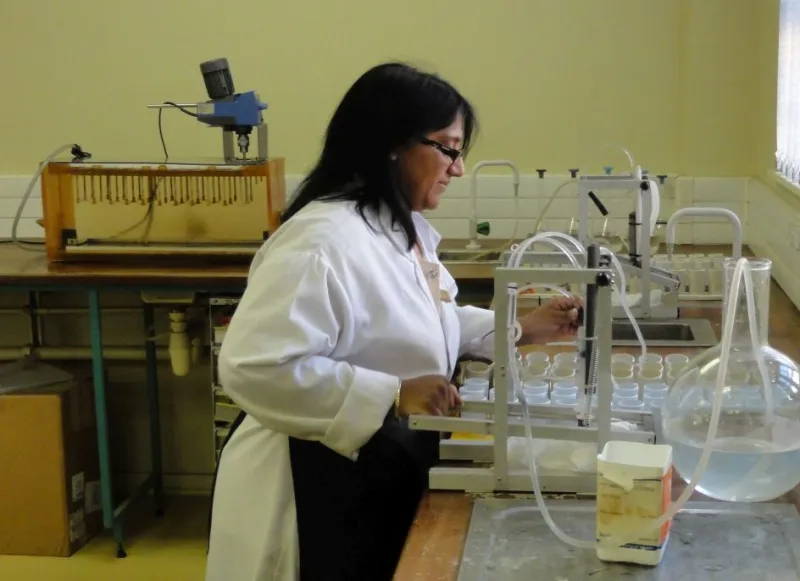
Photo: Alandmanson, CC BY-SA 4.0, via Wikimedia Commons
A pesticide's active life on a crop may last days or weeks, but its chemical legacy in soil and water can persist far longer—and in forms that bear little resemblance to the compound listed on the label. When researchers and environmental chemists speak of pesticide metabolites, they are referring to the cascade of transformation products generated as parent molecules interact with sunlight, moisture, soil microbiota, and ambient temperature. These are not inert residues. In many documented cases, they are biologically active compounds with distinct toxicological signatures—yet the regulatory architecture governing pesticide approvals in the United States was not designed with them in mind.
What Happens After the Spray Dries
The degradation of a pesticide is rarely a clean, linear process. Parent compounds may undergo hydrolysis, oxidation, photodegradation, or microbial transformation—and frequently, multiple pathways operate simultaneously. Each route can yield a structurally distinct metabolite, and those metabolites may themselves degrade into tertiary compounds. The result is a chemically complex environment that diverges significantly from the controlled laboratory conditions under which most pesticides are initially evaluated.
Glyphosate, the world's most widely used herbicide, offers a well-studied illustration of this complexity. Its principal environmental metabolite, aminomethylphosphonic acid (AMPA), is produced primarily through microbial degradation of the parent compound in soil and aquatic systems. AMPA is now detected routinely in US surface waters, groundwater, and agricultural soils—often at concentrations exceeding those of glyphosate itself. Research published in environmental toxicology literature has raised questions about AMPA's potential to affect aquatic organisms, yet its regulatory status under the Federal Insecticide, Fungicide, and Rodenticide Act (FIFRA) remains far less defined than that of glyphosate. The EPA's tolerance framework for glyphosate residues in food commodities does not always account for AMPA at equivalent levels of scrutiny.
The Neonicotinoid Case: When Metabolites Outlast the Parent
Neonicotinoids—imidacloprid, clothianidin, thiamethoxam, and related compounds—have attracted significant scientific and regulatory attention over the past decade, largely due to their documented effects on pollinator populations. What has received comparatively less public attention is the behavior of their degradation products in agricultural environments.
Imidacloprid, for instance, produces several transformation products in soil, including imidacloprid-urea and desnitro-imidacloprid. Studies have found that certain neonicotinoid metabolites retain meaningful insecticidal activity and, in some cases, demonstrate greater systemic mobility in plant tissue than the parent molecule. Clothianidin, itself a metabolite of thiamethoxam, illustrates the recursive nature of this problem: a regulated pesticide generates a product that is also a registered pesticide, raising questions about cumulative exposure assessments in environments where both compounds co-occur.
The persistence of neonicotinoid metabolites in soil has been documented across multiple US agricultural regions. Because these compounds can be taken up by the vascular systems of non-target plants growing adjacent to treated fields, they represent a pathway for pollinator exposure that standard pre-registration testing may not fully capture.
How the Regulatory Framework Was Built—and What It Missed
FIFRA requires that pesticide registrants submit data on the environmental fate of active ingredients, including information on major metabolites. The EPA does evaluate certain transformation products as part of the registration process, particularly those that form in significant quantities or exhibit known toxicity. However, the definition of "significant" and the threshold for what constitutes a "major" metabolite have been subjects of ongoing scientific debate.
Several structural limitations complicate comprehensive metabolite oversight. First, the registration process centers on the active ingredient as defined by the applicant, creating an incentive to characterize metabolites in ways that minimize their apparent regulatory relevance. Second, environmental monitoring programs operated by the US Geological Survey and state agencies are typically calibrated to detect parent compounds rather than their transformation products—largely because validated analytical methods for many metabolites either lag behind or are proprietary. Third, the toxicological databases that inform EPA risk assessments are substantially thinner for metabolites than for parent molecules, making it difficult to establish reference doses or derive meaningful safety thresholds.
Long-Term Chemical Evolution in Agricultural Soils
An underappreciated dimension of the metabolite problem is temporal. Agricultural soils accumulate pesticide inputs across growing seasons, and the transformation products of one compound may interact with the degradation pathways of another. Researchers studying mixed-use agricultural watersheds in the Midwest have documented the co-occurrence of dozens of pesticide-related compounds—parent molecules, primary metabolites, and secondary breakdown products—at concentrations that individually fall below regulatory thresholds but may act in concert through mechanisms such as synergistic toxicity or shared receptor binding.
This concept of mixture toxicity is well established in the scientific literature but remains difficult to operationalize within current regulatory frameworks, which evaluate compounds on an individual basis. The EPA has acknowledged the conceptual importance of cumulative risk assessment, and some progress has been made for specific chemical classes, but the integration of metabolite mixtures into routine risk evaluation remains an aspirational goal rather than a standard practice.
Toward a More Complete Picture
Addressing the metabolite gap will require movement on several fronts. Analytical chemistry has advanced considerably, and high-resolution mass spectrometry now enables the detection and tentative identification of transformation products at trace concentrations without prior knowledge of their structures—a technique known as non-target screening. Several European regulatory bodies have begun incorporating non-target environmental monitoring into pesticide oversight frameworks, and US researchers have argued for similar integration into FIFRA reregistration reviews.
Expanding validated analytical reference standards for known metabolites would also allow environmental monitoring programs to generate more systematic occurrence data, which in turn would strengthen the epidemiological and ecological evidence base needed to prompt formal regulatory action.
The science of pesticide fate has matured well beyond the assumptions embedded in mid-twentieth-century regulatory design. What the field now demands is a framework capable of keeping pace with chemical complexity—one that treats the transformation products of agricultural chemistry as subjects of inquiry in their own right, rather than as footnotes to the compounds that generated them.


