Weed and Feed, Wands and Waivers: The Case for Treating Residential Chemicals Like Real Chemistry
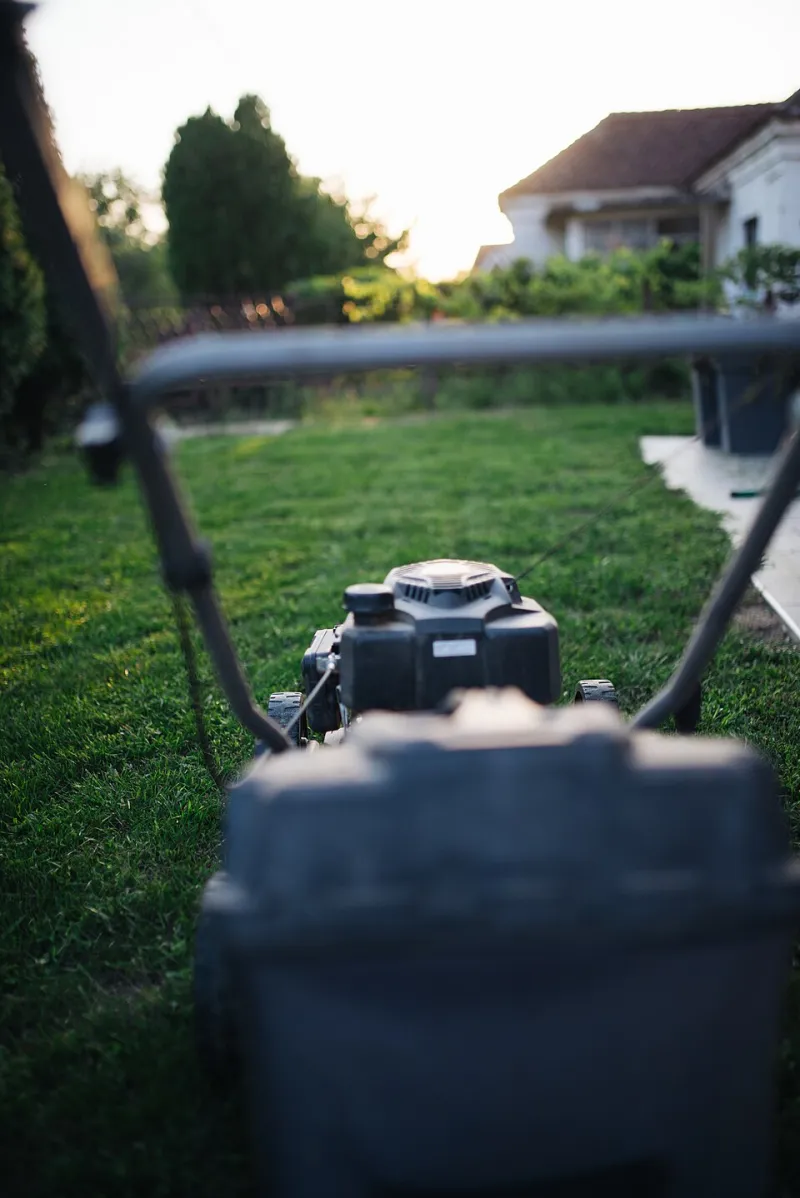
Photo: Shixart1985, CC BY 2.0, via Wikimedia Commons
An agronomist applying a herbicide on a licensed basis must complete training, maintain records, observe restricted-entry intervals, and account for every tank mix. A homeowner down the street can buy a comparable active ingredient, combined with a proprietary blend of carriers and adjuvants, at a hardware store, apply it in slippers, and never document a thing. The difference is not chemistry. It is paperwork.
What Is Actually in the Bag
Consider a typical combination 'weed and feed' product. The label names the active ingredients—often 2,4-D, dicamba, or a pyrethroid alongside fertilizer. Everything else falls under the term 'inert' or 'other ingredients,' a category that can include petroleum distillates, pH buffers, surfactants, and solvents. Some of these components are more hazardous than the actives themselves. Naphtha-based carriers have documented neurotoxic properties; certain ethoxylated surfactants enhance the dermal penetration of the active ingredients they carry.
Under OSHA's hazard communication standard, an industrial facility using these same formulations would be required to maintain safety data sheets, train employees on mixture hazards, and disclose constituent chemicals above threshold concentrations. The homeowner receives none of that. Federal pesticide law preempts states from requiring disclosure of inert ingredients, and the FIFRA framework treats residential use as inherently low-risk by design rather than by evidence.
The Dose Assumption
The regulatory logic rests on an assumption: that occasional, small-scale residential application produces negligible exposure. But the assumption ignores cumulative behavior. The average suburban household applies multiple products—herbicides in spring, insecticides in summer, fungicides in fall—often in the same week, on the same turf, by the same person. Exposure studies measuring urinary metabolites of 2,4-D in households after lawn application show detectable levels persisting for days, with residues tracked indoors on shoes, clothing, and pet paws.
Children are the population of particular concern. Their proximity to treated turf, hand-to-mouth behavior, and developing physiology mean that the exposure profile of a suburban lawn differs meaningfully from that of an adult farmworker in protective equipment. Yet the risk assessments underpinning residential registration do not always model this reality with the granularity applied to occupational scenarios.
The Mixture Problem
No registration process evaluates the full sequence of products an actual homeowner might apply. Each product is assessed individually. The interaction between a spring herbicide and a summer insecticide—whether synergistic toxicity, altered degradation rates, or combined metabolite burdens—is simply outside the regulatory frame. In an industrial setting, a chemical safety assessment would flag untested mixtures as a data gap requiring management. In the lawn care aisle, it is a marketing opportunity: combination products multiply, and none carry the disclosure that would let a user understand what they are actually combining.
What Reasonable Scrutiny Would Look Like
This is not an argument for banning lawn chemicals. It is an argument for parity. Sensible measures include:
- Full disclosure of inert ingredient classes on product labels and safety data sheets available at point of sale
- Standardized mixture-hazard labeling when products are intended for sequential or combined use
- Publicly accessible application-tracking databases at the municipal level, similar to those already maintained for commercial applicators in several states
- Updated residential exposure models that reflect real application behavior rather than idealized label compliance
A homeowner deserves to know what is in the bag with the same confidence that a worker deserves to know what is in the drum. The chemistry does not care who applies it. The regulatory system should not either.