Beyond the Active Ingredient: How the 'Inactive' Chemistry in Pesticide Formulations Shapes Real-World Outcomes
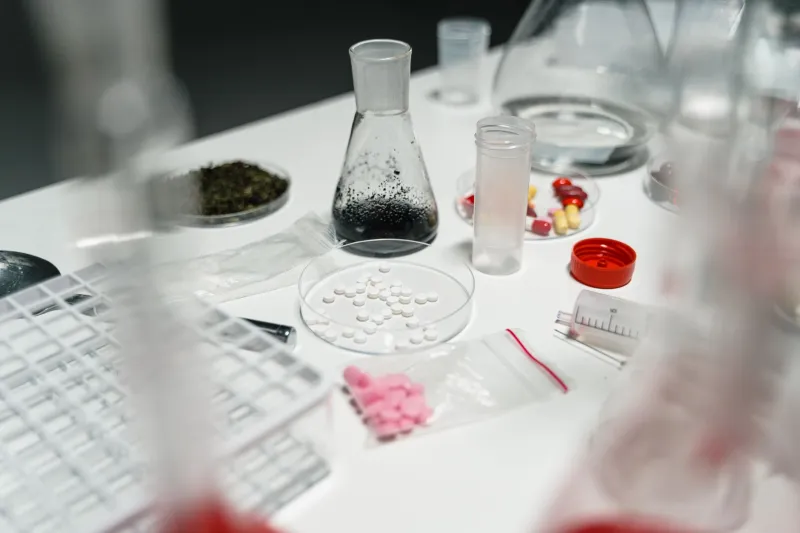
When a farmer reads a pesticide label, the active ingredient commands the most attention. It is the molecule that kills the target pest, the compound that regulatory agencies evaluate for toxicity, and the chemical identity most often cited in scientific literature. Yet that single molecule rarely acts alone. Surrounding it in any commercial formulation is a complex supporting cast of solvents, emulsifiers, surfactants, stabilizers, and adjuvants—compounds legally classified as "inert" but chemically anything but.
The gap between regulatory language and chemical reality is not a minor technicality. It is, for many researchers and field agronomists, one of the more consequential oversights in contemporary pesticide science.
What 'Inert' Actually Means—and Doesn't
Under current U.S. Environmental Protection Agency definitions, an inert ingredient is simply one that is not intended to affect the target pest directly. The term carries no implication of biological or environmental neutrality. Inert ingredients may comprise anywhere from 50 to 99 percent of a commercial pesticide product by volume, yet they receive comparatively limited toxicological scrutiny during the registration process.
The EPA does maintain lists of inert ingredients categorized by concern level, and it has moved to restrict certain compounds over the years. However, manufacturers are not universally required to disclose inert ingredients on product labels, and the specific formulations of commercial products are often protected as trade secrets. This creates a scenario in which a farmer, a clinician treating an exposure case, or an environmental scientist modeling chemical fate may know the active ingredient with precision while remaining largely uninformed about the remainder of what was applied.
This is not a hypothetical concern. Research has repeatedly demonstrated that the biological activity of a pesticide formulation can differ substantially from that of the active ingredient tested in isolation.
The Surfactant Effect: Amplifying Toxicity Without Changing the Label
Surfactants are among the most consequential inert ingredients in pesticide chemistry. Their primary function is practical: by reducing surface tension, they help the pesticide solution spread evenly across leaf surfaces, penetrate waxy cuticles, and adhere more effectively to the target. Without surfactants, many herbicides and insecticides would be far less effective in field conditions.
But surfactants do not restrict their activity to plant surfaces. In aquatic environments, they can disrupt gill membranes in fish and amphibians. In soil, they alter microbial community dynamics. In mammalian systems, they can increase cellular membrane permeability, potentially enhancing the uptake of the active ingredient itself.
The herbicide glyphosate offers perhaps the most extensively studied example of this phenomenon. Studies comparing glyphosate in isolation to formulated products containing polyethoxylated tallow amine (POEA) surfactants have found the commercial formulations to be substantially more toxic to non-target organisms—including human cell lines—than glyphosate alone. This distinction became scientifically and legally significant as debates over glyphosate's safety intensified throughout the 2010s. Regulatory assessments focused on the active ingredient; critics argued the assessments were therefore incomplete.
POEA has since been restricted or banned in several countries, and some manufacturers have moved to alternative surfactant systems. The episode, however, illustrates how the inert fraction can drive outcomes that the active ingredient data alone would not predict.
Solvents, Carriers, and the Problem of Environmental Fate
Beyond surfactants, petroleum-derived solvents are commonly used to dissolve active ingredients, particularly in emulsifiable concentrate formulations. These solvents influence how a pesticide partitions between soil particles, water, and the atmosphere once applied. A compound that appears relatively immobile when tested as a pure active ingredient may behave quite differently when delivered within a solvent matrix that alters its solubility characteristics.
Similarly, certain carrier compounds used in granular or dust formulations can affect the rate at which active ingredients volatilize or degrade. This has implications for both efficacy—a pesticide that volatilizes too quickly may not deliver adequate pest control—and for off-target exposure, including inhalation risks for farmworkers and drift to adjacent ecosystems.
Researchers studying the environmental fate of neonicotinoid insecticides have noted that formulation differences between products containing the same active ingredient can produce measurably different soil residue profiles. The same active ingredient, delivered via different formulation chemistries, does not necessarily produce the same environmental outcome.
Adjuvants Added in the Field: A Layer Beyond the Label
The complexity deepens further when considering adjuvants added by applicators at the point of use. Tank-mix adjuvants—crop oil concentrates, methylated seed oils, nitrogen-based activators—are routinely blended with pesticides in the field to enhance performance. These products are sold separately and are not part of the registered pesticide formulation, meaning their interactions with the active ingredient occur entirely outside the scope of registration-based safety testing.
Extension agronomists across the Corn Belt and the South routinely recommend specific adjuvant combinations for particular crops and conditions. The recommendations are grounded in efficacy data, but systematic toxicological evaluation of these combinations is sparse. When a pesticide formulation plus a field-added adjuvant produces an unexpected outcome—whether elevated phytotoxicity, altered runoff behavior, or an anomalous effect on beneficial insects—attributing the cause becomes scientifically and legally complicated.
Regulatory Frameworks and Their Inherent Limitations
The EPA's pesticide registration process under the Federal Insecticide, Fungicide, and Rodenticide Act (FIFRA) is structured around the active ingredient as the unit of regulatory concern. This approach has logical foundations: the active ingredient is the intentional bioactive component, and standardizing evaluation around it enables comparisons across products and manufacturers.
The limitation is that it treats the formulation matrix as a neutral delivery vehicle when the evidence suggests otherwise. Several academic researchers and public health scientists have called for expanded requirements for formulation-level toxicity data, arguing that registration based primarily on active ingredient testing creates a systematic blind spot.
Some progress has occurred. The EPA has increased scrutiny of certain high-concern inert ingredients and has pushed for greater transparency in disclosures. But the pace of reform has been incremental, and the commercial confidentiality provisions that shield formulation details from public disclosure remain largely intact.
Toward a More Complete Chemistry
For practitioners and researchers working at the intersection of pesticide science and environmental health, the lesson is practical as well as conceptual. Evaluating a pesticide product requires looking beyond the active ingredient percentage on the label. Understanding the formulation type—whether it is an emulsifiable concentrate, a suspension concentrate, a wettable powder, or a water-dispersible granule—provides meaningful clues about the chemistry in the container.
Where possible, consulting the full Safety Data Sheet rather than relying solely on the product label offers additional formulation detail. Peer-reviewed literature comparing formulated products to technical-grade active ingredients can reveal divergences that matter in risk assessment and environmental modeling.
The active ingredient remains essential. It defines the mechanism of action, the target pest spectrum, and the primary toxicological identity of a pesticide product. But it is, in the most literal chemical sense, only part of the story. The science of pesticide formulation is a discipline in its own right—one that deserves more systematic attention from regulators, researchers, and the agricultural professionals who depend on accurate information to make sound decisions in the field.