What Comes Out of the Tap: Tracking Agricultural Pesticide Residues Through Municipal Water Treatment
The journey from farm field to household faucet is longer and more chemically eventful than most water consumers appreciate. Between an herbicide application in a Midwestern corn field and the glass of water poured in a Chicago apartment, a sequence of hydrological, chemical, and engineering processes intervenes. The question that water chemists and public health researchers have been pressing with increasing urgency is whether those processes—designed for a different era of contamination—are adequate for the pesticide chemistry of the twenty-first century.
The Treatment Sequence and Its Original Purpose
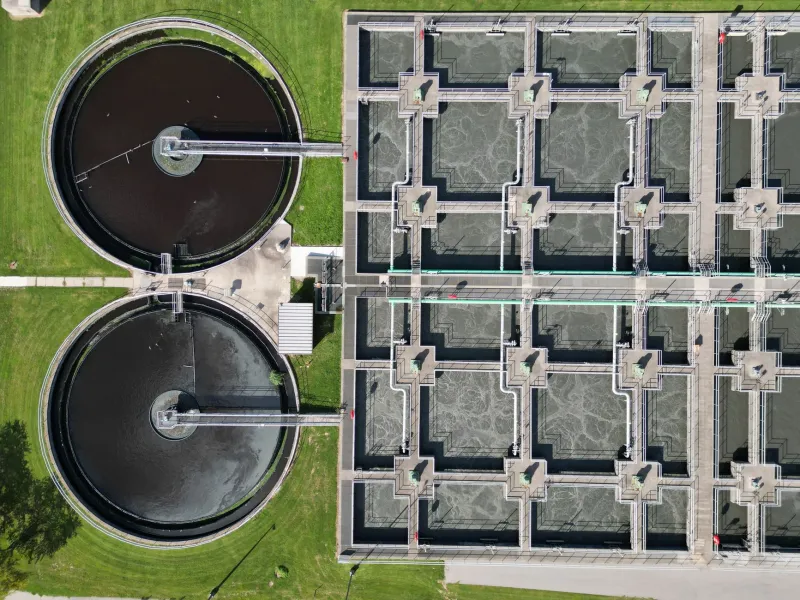
Conventional municipal water treatment in the United States follows a process sequence developed primarily to address turbidity, bacterial pathogens, and naturally occurring organic matter. The standard train typically includes coagulation and flocculation (using aluminum sulfate or ferric chloride to aggregate suspended particles), sedimentation, rapid sand or granular media filtration, and disinfection through chlorination or, in some systems, UV irradiation and ozonation.
This sequence is highly effective at what it was designed to do. It is considerably less effective at removing dissolved organic micropollutants—a category that encompasses most modern pesticide active ingredients and their degradation products.
Coagulation: Effective for Particles, Limited for Dissolved Compounds
Coagulation removes contaminants by aggregating them into settleable flocs. For pesticides, the efficiency of this step is almost entirely dependent on whether a compound is particle-associated or freely dissolved in the water column. Highly water-soluble herbicides—including atrazine, metolachlor, and glyphosate—exist predominantly in dissolved form in surface water and are therefore largely unaffected by coagulation. Studies from water utilities in the Illinois River basin and the Ohio River valley have consistently documented that coagulation removes less than 10 percent of dissolved atrazine concentrations, even under optimized conditions.
More hydrophobic compounds, such as some legacy organochlorines and certain pyrethroids, partition more readily onto particulate matter and are removed more efficiently. The challenge is that modern agricultural chemistry has deliberately moved toward more water-soluble formulations to improve foliar uptake and reduce soil persistence—properties that simultaneously make these compounds more mobile in aquatic systems and more resistant to coagulation-based removal.
Chlorination: Treatment That Creates New Problems
Chlorination is the most universally applied disinfection step in US water treatment, and its interaction with pesticide residues is chemically complex in ways that regulatory frameworks have been slow to address.
For some compounds, chlorination achieves meaningful degradation. Certain carbamate insecticides and some triazine herbicides are partially oxidized by free chlorine under conditions typical of water treatment. For others, however, chlorination does not eliminate the compound—it transforms it into disinfection byproducts (DBPs) whose toxicological profiles may differ substantially from the parent molecule.
Chlorination of atrazine, for example, can generate chlorinated transformation products including deethylatrazine and deisopropylatrazine. These metabolites are regulated under EPA's Maximum Contaminant Level (MCL) framework as a combined residue, but the analytical monitoring that utilities are required to conduct does not always capture the full spectrum of chlorination-derived transformation products. A utility can report compliance with the atrazine MCL of 3 parts per billion while the actual mixture of atrazine and its chlorinated derivatives in finished water remains analytically uncharacterized.
Glyphosate presents a particularly instructive case. Research published in environmental engineering literature has documented that chlorination of glyphosate can generate aminomethylphosphonic acid (AMPA) and, under some conditions, formaldehyde—a compound with its own regulatory and health implications. AMPA is not subject to a standalone MCL in US drinking water standards.
Granular Activated Carbon: The Gap in Standard Treatment
Granular activated carbon (GAC) filtration is among the most effective technologies available for removing dissolved organic micropollutants, including pesticide residues. However, GAC is not a universal component of US municipal water treatment infrastructure. The Safe Drinking Water Act does not mandate GAC as a treatment requirement for pesticide removal; its use is typically driven by local source water conditions and utility capital investment capacity.
In agricultural regions where surface water intakes draw from rivers and reservoirs with elevated pesticide loads—the Mississippi River basin, the Chesapeake Bay watershed, the Central Valley of California—the absence of GAC in treatment trains represents a meaningful gap between contamination reality and treatment capability.
Even where GAC is installed, its effectiveness is time-limited. GAC beds become saturated with adsorbed organic material over time and must be regenerated or replaced. Utilities operating under budget constraints may extend GAC service cycles beyond optimal performance windows, reducing removal efficiency during periods of peak pesticide loading—which often correspond to post-application rainfall events in spring and early summer.
What the Monitoring Data Shows
The US Geological Survey's National Water Quality Assessment program and EPA's Unregulated Contaminant Monitoring Rule (UCMR) cycles have generated a substantial body of occurrence data for pesticides in finished drinking water. The picture that emerges is one of widespread low-level presence rather than acute exceedances.
In UCMR 3 and UCMR 4 monitoring cycles, several pesticide compounds and metabolites were detected in finished water at measurable concentrations in utilities serving agricultural watersheds. Acetochlor ESA and acetochlor OXA—metabolites of the herbicide acetochlor—were among the most frequently detected compounds. Neither has a federal MCL. The herbicide metolachlor and its sulfonyl acetic acid metabolite were similarly detected across multiple Midwestern utilities.
The regulatory implication is significant: utilities are in compliance with all applicable standards while delivering finished water that contains a suite of pesticide-derived compounds for which no health-based limits have been established.
Closing the Gap Between Standards and Science
The EPA's MCL-setting process requires a formal rulemaking procedure that, for most unregulated contaminants, takes years to complete. The UCMR program identifies candidates for potential regulation, but the pathway from detection to enforceable standard is neither rapid nor certain. In the interim, consumers in agricultural communities are relying on treatment systems designed for a different chemical landscape, regulated by standards that do not yet reflect the compounds most commonly present in their source water.
Advanced treatment technologies—ozonation, nanofiltration, reverse osmosis—are capable of substantially reducing pesticide residue loads in finished water. Their deployment, however, requires capital investment and operational expertise that smaller utilities, which serve many of the agricultural communities most exposed to pesticide-contaminated source water, often cannot sustain. The chemistry of modern agriculture has outpaced both the engineering of water treatment infrastructure and the regulatory frameworks designed to govern it.