The Silent Amplifiers: How Adjuvants Rewrite the Toxicological Story of Pesticide Formulations

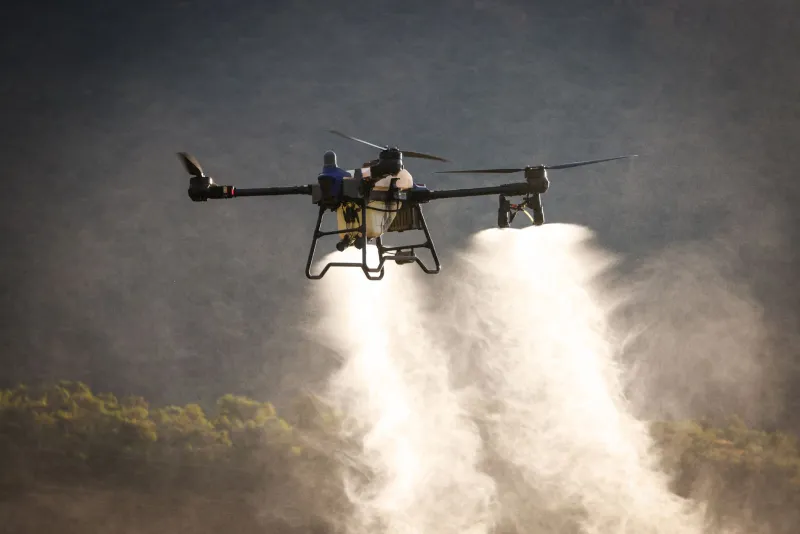
Photo by Photo by Raghav Bhasin on Unsplash on Unsplash
When a farmer or pest management professional reads a pesticide safety label, the document they are holding reflects a regulatory assessment built almost entirely around a single chemical entity: the active ingredient. The LD50 values, the restricted entry intervals, the environmental hazard statements—all of these derive from toxicological studies conducted on the active ingredient, often in purified form, often in isolation.
What they are actually spraying is something considerably more complex.
Commercial pesticide formulations routinely contain surfactants, petroleum distillates, emulsifiers, humectants, drift control polymers, and pH buffers. These compounds, collectively termed adjuvants, are added to improve the physical performance of the spray: enhancing droplet adhesion to waxy leaf surfaces, preventing premature evaporation, stabilizing the emulsion, or increasing the rate at which the active ingredient crosses the plant cuticle. They are classified as "inert" ingredients under the Federal Insecticide, Fungicide, and Rodenticide Act (FIFRA), a designation that refers to their functional relationship to pest control—not to their biological or toxicological activity.
The word "inert" has consequences. It shapes what gets tested, what gets disclosed, and what gets regulated.
The Chemistry of Enhancement
To appreciate why adjuvants matter toxicologically, it is necessary to understand what they are chemically designed to do.
Surfactants—surface-active agents—are among the most widely used adjuvant classes. Their molecular architecture includes a hydrophilic head group and a hydrophobic tail, a structure that allows them to insert into and disrupt lipid bilayers. This property is precisely what makes them effective at moving pesticide active ingredients across plant cuticles, which are themselves lipid-rich barriers. The same mechanism, however, operates on animal cell membranes, including those of skin cells, gill epithelium in fish, and the intestinal lining of invertebrates.
Polyethoxylated tallow amine (POEA), a surfactant historically used in glyphosate formulations, became a subject of significant scientific scrutiny after studies demonstrated that commercial glyphosate products containing POEA exhibited substantially greater aquatic toxicity than equivalent concentrations of technical-grade glyphosate alone. Research published in Environmental Toxicology and Chemistry found that POEA disrupted cell membrane integrity in amphibian embryos at concentrations well below those required to produce observable effects from glyphosate in isolation. The active ingredient was not the primary driver of toxicity in these aquatic exposure scenarios. The "inert" ingredient was.
Similar dynamics have been documented with methylated seed oil adjuvants, which enhance dermal penetration of active ingredients in ways that can significantly increase systemic exposure in applicators. Studies examining pyrethroid formulations with and without oil-based adjuvants have found that skin absorption rates can increase by factors of two to five depending on the specific carrier system used—a difference that existing label-based personal protective equipment requirements may not adequately account for.
What the Registration Process Doesn't See
Under current EPA practice, adjuvants that are added to pesticide products during the manufacturing process are subject to review as part of the overall formulation registration. However, the depth of that review is asymmetric. Active ingredients must satisfy extensive data requirements covering acute toxicity, subchronic effects, reproductive and developmental toxicity, environmental fate, and ecological risk. Inert ingredients are evaluated against a tiered framework that, for many compounds, relies on existing safety literature rather than new study submissions.
More significantly, adjuvants that are mixed with pesticides by the end user—so-called "tank mix adjuvants" sold separately from the pesticide product—fall almost entirely outside the pesticide registration system. A farmer who follows label directions and adds a commercially available non-ionic surfactant to a herbicide tank mix is combining two products, each of which may have been assessed individually, but whose combined toxicological and environmental fate profile has almost certainly never been evaluated.
This is not a hypothetical oversight. Tank mixing is standard agricultural practice across the United States. The interaction chemistry between adjuvants and active ingredients can affect not only biological uptake but also environmental persistence. Certain surfactants slow the hydrolysis of organophosphate compounds in soil and water, effectively extending the window of ecological exposure beyond what degradation studies on the active ingredient alone would predict.
Penetration, Distribution, and Unintended Targets
The membrane-disrupting properties of adjuvants create exposure pathways that safety assessments based on active ingredient chemistry alone cannot fully characterize. Dermal exposure is the most clinically relevant for applicators. Formulated products that include penetration-enhancing adjuvants can deliver active ingredient to systemic circulation at rates that exceed inhalation as the dominant exposure route in certain application scenarios—a reversal of the typical risk hierarchy that some occupational health models do not reflect.
For non-target organisms, the implications extend to aquatic ecosystems. Agricultural runoff carries not just active ingredients but the full formulation matrix, including adjuvants that may be more water-soluble and more bioavailable than the active ingredient itself. Standard EPA aquatic toxicity testing protocols use technical-grade active ingredients, not commercial formulations. The ecological risk characterization that emerges from those tests may therefore understate real-world toxicity to fish, amphibians, and invertebrates in receiving water bodies.
Bee toxicology presents another dimension of concern. Studies examining the effects of adjuvant-containing formulations on Apis mellifera have found that certain surfactants impair the mucociliary clearance mechanisms in bee airways and alter gut epithelial integrity—effects not predicted by active ingredient toxicity data alone. Given that pesticide exposure is consistently identified as a contributing stressor in colony health assessments, the adjuvant contribution to that exposure burden deserves commensurate scientific and regulatory attention.
Disclosure, Transparency, and the Path Forward
The EPA has made incremental progress on inert ingredient transparency. The agency maintains a list of inert ingredients approved for use in pesticide formulations, and since 2010 has taken steps to remove certain high-concern compounds from that approved list. Some states, including California, require broader inert ingredient disclosure than federal standards mandate.
However, the fundamental asymmetry between active and inert ingredient scrutiny has not been resolved. A comprehensive adjuvant risk framework would require, at minimum, toxicological assessment of formulated products rather than isolated active ingredients, mandatory disclosure of adjuvant identity on product labels, and environmental fate evaluation that accounts for the full chemical matrix present in tank-mixed field applications.
For practitioners and researchers, the actionable insight is this: the label is a starting point, not a complete toxicological picture. The chemistry in the tank is always more complex than the chemistry in the registration file.