Vapor Without Borders: The Chemistry of Pesticide Volatilization and Its Quiet Toll on Suburban Plant Life
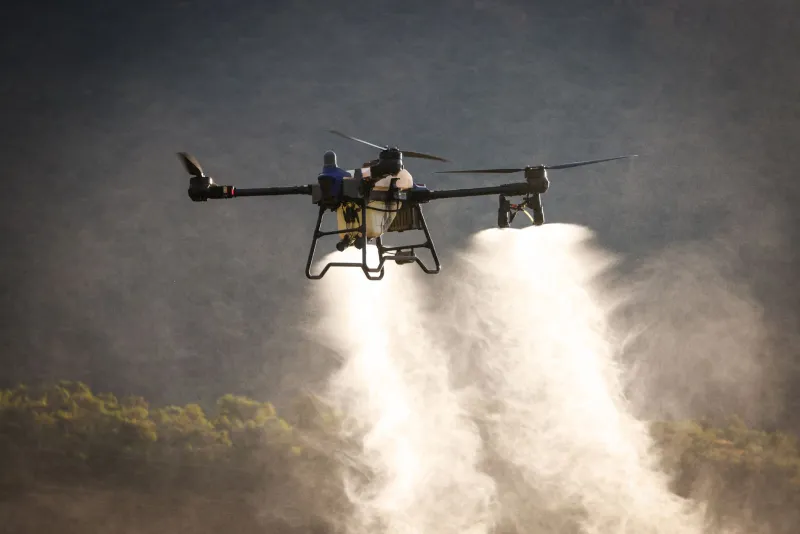
In the summer months across American suburbs, the smell of freshly applied lawn treatments is as familiar as cut grass. What most residents do not perceive—because it is invisible and largely odorless—is the secondary migration of those chemical compounds into the air, across fence lines, and into the tissues of plants that were never intended as targets. This phenomenon, known as pesticide volatilization, is increasingly recognized as a meaningful and underregulated pathway of off-target chemical exposure.
What Volatilization Actually Means in Chemical Terms
Volatilization refers to the phase transition of a compound from a liquid or solid state into a gaseous vapor. For pesticides, this process is governed by several physicochemical properties: vapor pressure, Henry's Law constant, soil adsorption coefficients, and ambient temperature. Compounds with higher vapor pressures—such as certain organophosphates, trifluralin, and dicamba—are particularly prone to post-application volatilization, sometimes continuing to off-gas for days after initial application.
Dicamba, a synthetic auxin herbicide now widely used in tandem with dicamba-tolerant soybean and cotton varieties, has become something of a case study in volatilization-driven off-target damage. Unlike older formulations, newer low-volatility dicamba salts were engineered specifically to reduce vapor drift. Yet field reports and subsequent peer-reviewed research have documented significant off-target plant injury at distances exceeding one mile from application sites—injury patterns consistent with vapor-phase movement rather than particle drift alone. The distinction matters enormously from a regulatory standpoint, because most drift modeling focuses on particle behavior, not vapor dynamics.
The EPA's Modeling Gap
The U.S. Environmental Protection Agency employs several computational frameworks to estimate pesticide exposure risk, including the Pesticide Root Zone Model (PRZM) and the Spray Drift Task Force datasets. These tools are well-suited for estimating aquatic buffer zones and field-margin exposures under particulate drift scenarios. However, they are less adept at capturing the full arc of volatilization-driven secondary exposure, particularly in heterogeneous suburban landscapes where microclimatic conditions—surface temperature differentials, wind channeling between structures, humidity gradients—diverge sharply from the open agricultural fields on which most models are calibrated.
A 2021 review published in Environmental Science & Technology noted that current regulatory risk assessments for volatile pesticides often underestimate real-world vapor flux by factors of two to ten under certain temperature and soil moisture conditions. For suburban environments, where application events from multiple adjacent properties may overlap temporally, the cumulative vapor load in ambient air can exceed what any single-source model would predict.
What Happens When Vapor Reaches a Plant
Plants are not passive recipients of chemical vapor. When volatile pesticide molecules contact leaf surfaces, they can be absorbed through stomata and the cuticle, entering metabolic pathways in ways that differ from root-uptake or direct foliar spray scenarios. The physiological consequences depend heavily on compound class, concentration, and the species receiving the exposure.
Auxin-mimic herbicides like dicamba and 2,4-D induce characteristic epinastic responses—downward curling of leaves, distorted growth, and in severe cases, necrosis—in broadleaf plants that lack engineered tolerance. These symptoms have been documented in residential vegetable gardens, ornamental plantings, and native plant restorations adjacent to treated properties across the Midwest and Southeast. Beyond visible injury, sub-symptomatic exposures at low vapor concentrations can still disrupt photosynthetic efficiency, alter stomatal conductance, and interfere with plant hormone signaling cascades without producing lesions visible to the naked eye.
Research from the University of Missouri and subsequent studies at land-grant institutions has demonstrated that even brief vapor exposures to concentrations well below those causing visible injury can reduce soybean yield components and alter secondary metabolite profiles in sensitive crops. Extrapolating this to ornamental and wild plant species in suburban corridors suggests a broader, if largely unquantified, perturbation of plant biochemistry at the landscape scale.
Soil Chemistry as a Secondary Recipient
Volatilized compounds do not remain airborne indefinitely. Dry and wet deposition return them to soil surfaces, sometimes at considerable distances from the original application site. Once deposited, these compounds interact with soil organic matter, clay minerals, and microbial communities in ways that may differ from direct soil application, partly because deposition occurs at the soil surface where microbial activity and photodegradation are most intense.
The ecological significance of this deposition pathway is not trivial. Soils in suburban settings often host diverse plantings with shallow root systems, ornamental ground covers, and vegetable gardens whose produce enters the human food supply without the pesticide testing protocols applied to commercial crops. The chemistry of what accumulates in these soils—and subsequently in plant tissues—remains largely uncharacterized in regulatory frameworks.
Cumulative Exposure in the Suburban Mosaic
Perhaps the most underappreciated dimension of suburban volatilization is its cumulative character. A residential neighborhood is not a single-application environment. Over a growing season, a given parcel may receive vapor inputs from lawn care services, neighboring agricultural operations, municipal rights-of-way treatments, and golf course management programs—each contributing a distinct chemical signature to the ambient air and soil chemistry of that microenvironment.
When researchers at the University of California, Davis, and partner institutions have sampled air quality in peri-urban agricultural corridors in California's Central Valley, they have consistently detected mixtures of multiple pesticide classes simultaneously, including compounds not applied locally. The suburban Midwest, Southeast, and Mid-Atlantic regions present analogous conditions, though systematic air monitoring in residential zones remains sparse compared to occupational or agricultural settings.
What Comes Next for Science and Regulation
The science of pesticide vapor drift is advancing faster than regulatory frameworks can absorb. Improved atmospheric dispersion models, portable field-deployable air samplers, and plant biomarker assays are giving researchers new tools to document what has long been suspected but difficult to quantify. Several states, including Minnesota and California, have moved toward more stringent buffer zone requirements for high-volatility compounds, though federal standards have been slower to evolve.
For informed residents, the takeaway is not alarm but awareness. Understanding that chemical applications in one part of a neighborhood can influence the plant physiology and soil chemistry of adjacent properties is a necessary foundation for more honest conversations about cumulative exposure, land-use compatibility, and what responsible pesticide stewardship means in densely settled American landscapes. The vapor does not read property lines—and increasingly, neither does the science that follows it.